



Most of us end the day the same way we spent it: looking at a screen. We answer the last email on a laptop, decompress with a phone in one hand, then fall asleep to something streaming in the background. It feels like rest. It rarely is. If you have been searching for screen-free hobbies or simply hobbies to reduce screen time, there is a good reason your instincts are pointing you toward something you can hold in your hands.
The numbers explain the itch. Adults now spend a large share of their waking hours in front of a display. Global estimates put average daily screen time at roughly six hours and forty minutes, and U.S. adults land closer to seven hours a day, a figure that has climbed steadily over the past decade. When most of your leisure and most of your work happen on the same rectangle of glass, the line between the two blurs, and the mind never quite clocks out.
Hands-on building offers a way out of that loop. It is not a productivity hack or a digital detox gimmick. It is a genuinely different mode of attention, and a growing body of research suggests it is good for you in measurable ways.
What Counts as a Screen-Free Hobby
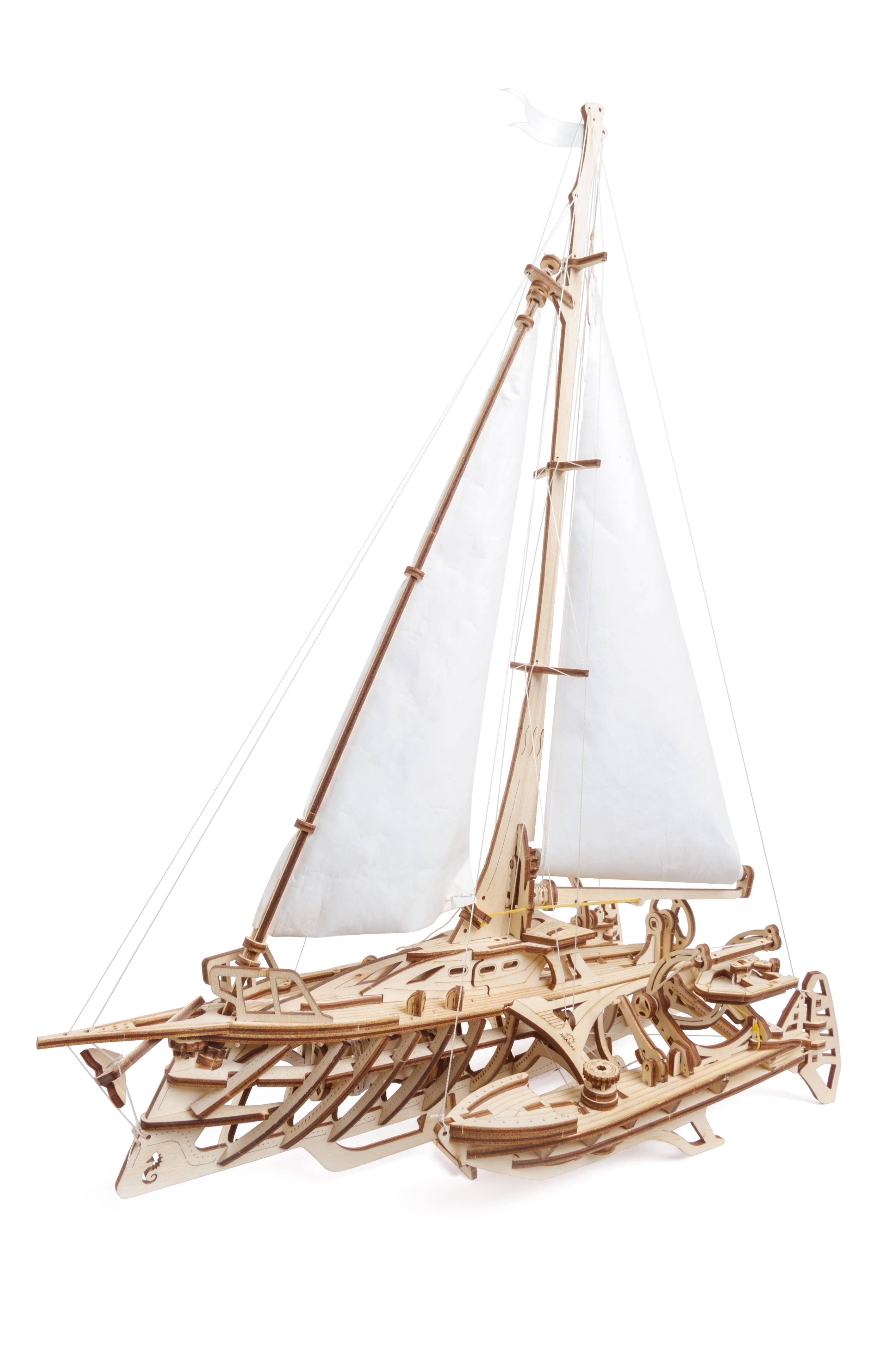
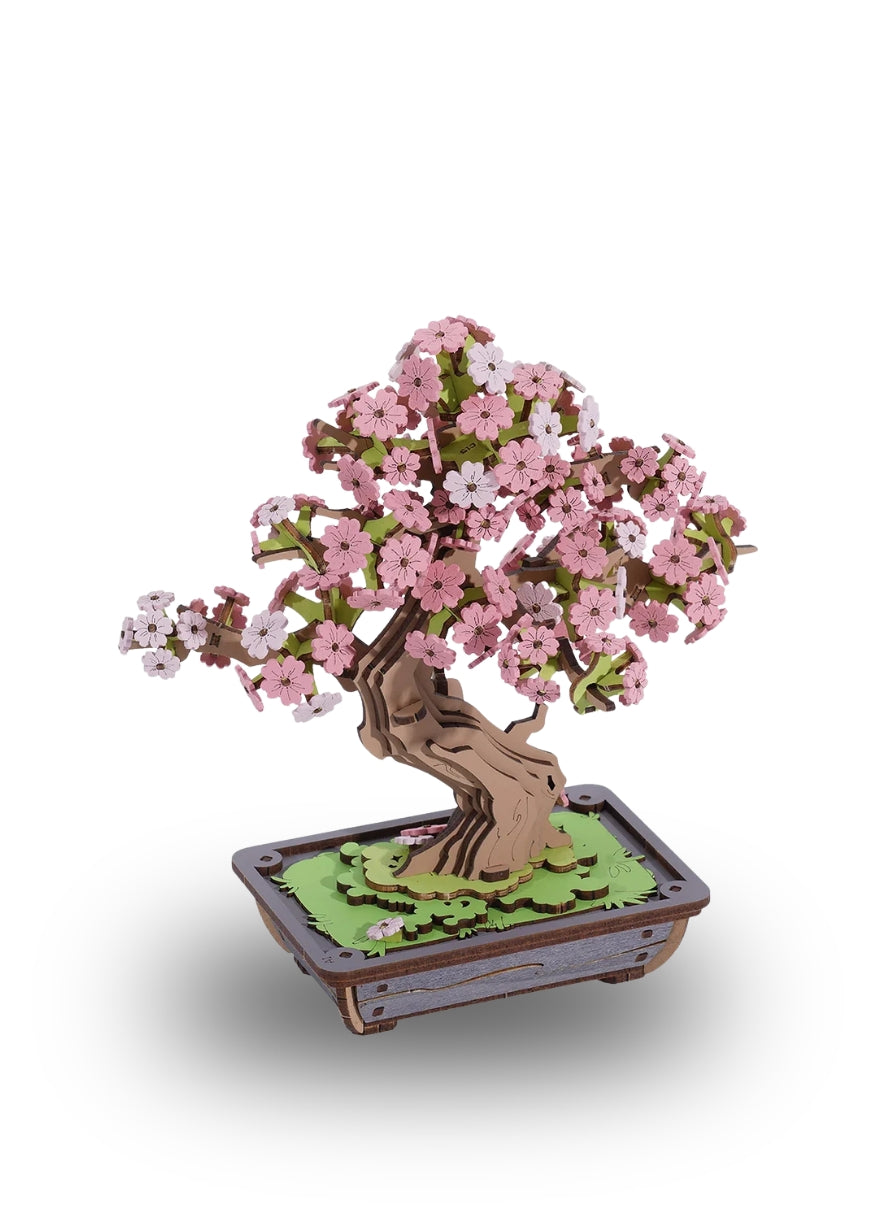
A screen-free hobby is any absorbing activity that lives entirely off your devices. Gardening qualifies. So does cooking, sketching, woodworking, and playing an instrument. At Curio Wonder, our corner of that world is hands-on building: book nooks that slot into a shelf like a lit doorway to another place, mechanical wooden kits with gears that actually turn, 3D puzzles, miniature room kits, and building block sets.
What these share is a shape that scrolling never has. There is a beginning, a middle, and a finished object you can set on a shelf. Your attention has somewhere to go and somewhere to land. That structure turns out to matter a great deal.
The Science: What Hands-On Building Does to a Stressed Brain
The case for screen-free hobbies is not just a vibe. Researchers have started to quantify what people who build and craft have described for generations.
It lowers your stress hormones
In a frequently cited study from Drexel University, researchers measured cortisol, the body's main stress hormone, before and after participants spent forty-five minutes making art. Roughly three-quarters of participants showed a drop in cortisol afterward, and the effect held regardless of whether someone had any prior artistic experience. Skill was not the point. Engagement was. You do not need to be good at building to get the calming benefit of it, which is a relief to anyone who has ever felt intimidated by a hobby that looked like it required talent.
It boosts wellbeing as much as some major life factors
A 2024 study published in Frontiers in Public Health analyzed responses from more than seven thousand people and found that those who took part in crafts reported higher happiness and life satisfaction, along with a stronger sense that life is worthwhile. Strikingly, the researchers found that the boost to that sense of meaning rivaled the effect of being employed. As CNN reported on the same study, crafting offers something a job does not always provide: a low-stakes, self-directed route to a sense of achievement and self-expression.
It works like active meditation
If sitting still to meditate has never clicked for you, hands-on building may be the version that does. In an international survey of more than three thousand knitters conducted with Cardiff University, the majority reported feeling calmer and happier when they knitted more often, and more than half of those dealing with depression said it lifted their mood. The researchers behind that work describe the rhythmic, repetitive motion of handwork as producing a meditative, almost automatic state. Building a kit works the same way. The steady rhythm of finding a piece, placing it, and moving to the next quietly pulls your focus off the day's worries and into the task in front of you.
The pattern holds across the research
None of these findings is a one-off. A 2025 scoping review in the medical literature that pooled results across multiple studies concluded that hobbies are associated with lower levels of depression, anxiety, and stress and with better overall wellbeing. Mental Health America likewise lists creative, hands-on hobbies among its research-backed activities for supporting mental health. The consistency is the point. When many different studies, populations, and methods keep arriving at the same conclusion, it stops looking like coincidence.
Why Building Beats Scrolling for Unwinding
Streaming and social media are designed to hold your attention indefinitely. There is always another episode, another post, another notification. That design is the opposite of restful, because your brain never receives the signal that it is done.
Hands-on building sends that signal constantly. Psychologists use the term "flow" for the state of being so absorbed in a well-matched challenge that you lose track of time and self-consciousness. A good kit is engineered for flow. It is challenging enough to occupy your mind fully, but not so difficult that you tense up and give up. You slip into the work, the mental chatter quiets, and an hour passes without a single glance at your phone.
There is also the deeply satisfying fact of a finished object. Scrolling produces nothing you can hold. When you complete a book nook or a wooden clock that actually ticks, you end up with proof that your evening amounted to something. That small sense of accomplishment is exactly what the wellbeing research keeps pointing to.
And unlike a screen, building gives your hands something to do. The tactile experience of fitting wooden pieces, aligning tiny walls, or clicking blocks into place engages you physically in a way passive watching never can. Your eyes get a break from a glowing display. Your body gets to participate. The activity occupies the same restless energy that would otherwise send your thumb back to the feed.
How to Use Hobbies to Reduce Screen Time
Cutting screen time by willpower alone rarely works, because it leaves a vacuum where the scrolling used to be. The more reliable approach is replacement: give yourself something better to reach for. Here is how to make a screen-free hobby stick.
Start with a project that matches your patience, not your ambition. If you are new to hands-on building, a smaller kit you can finish in a sitting or two will feel rewarding rather than daunting. Momentum comes from completion, so let your first project be one you will actually complete.
Give it a home and a time. Set up a small, well-lit spot where your project can stay out between sessions, so picking it back up takes no effort. Then claim a slice of the day for it, ideally the exact window you would otherwise spend scrolling. The half hour after dinner is a natural candidate.
Put the phone in another room. The point is not just to build, but to build without the pull of a device in your peripheral vision. Physical distance from your phone is one of the simplest and most effective ways to protect your focus.
Let it be imperfect. The research is clear that the benefit comes from the doing, not from the result. Your first miniature room will have a crooked wall. Build it anyway. The calm is in the process.
Consider making it social. Group crafting has been shown to add benefits around connection and community on top of the individual calm. Building alongside a partner, a kid, or a friend turns a quiet hobby into shared time, without a screen mediating any of it.
A Different Kind of Evening
The point of screen-free hobbies is not to demonize technology. Screens are woven into how we work and connect, and that is not changing. The point is balance. After a day spent producing and consuming on screens, your mind needs somewhere else to go, and passive scrolling is not that place.
Hands-on building is. It lowers the stress hormones the research measures. It delivers the sense of meaning that studies rank alongside major life factors. It offers the active, meditative flow that so many people struggle to find any other way. And at the end of it, you are holding something you made.
That is the quiet argument behind everything we do at Curio Wonder. A book nook glowing on a shelf, a wooden mechanism you assembled yourself, a miniature world small enough to hold: these are not just objects. They are evidence of an evening you spent unwound, off the screen, and fully in your own hands.
Ready to trade an hour of scrolling for something you can build? Explore our collection of screen-free building kits and pick the project that pulls you in.
